Real estate lead follow-up: why leads go cold and how to stop it
RealEstateCRM España · 31 August 2026
The lead comes in on a Friday at seven in the evening, through Instagram, asking about a flat you've had listed for two weeks. Nobody on the team sees it until Monday morning, because that message lives inside the social media manager's phone, not anywhere the rest of the team checks. By the time someone finally replies, the buyer has already messaged three other agencies and viewed two flats with whichever one answered first. That lead wasn't lost to a worse listing or a higher price: it was lost to sixty hours of silence that weren't really any one person's fault, just the result of capture being scattered across five different places.
Most real estate leads that end up written off don't leave because they lose interest — they leave because the first reply takes too long. When a lead arrives through Instagram, WhatsApp, Facebook or a portal's contact form and each channel lives on a different screen, keeping it from going cold means centralising every channel in one place the moment it comes in, not typing faster once it's already too late.
Five channels, one inbox nobody checks in full
At a mid-sized agency, Instagram, Facebook, TikTok, WhatsApp Business and each portal's email can add up to fifteen or twenty new contacts a week, and almost never does the same person check all of them. Whoever runs social media doesn't log into the portal inbox, whoever answers WhatsApp has no reason to check Facebook comments, and that division of labour, sensible as it is for running social media, is exactly what leaves no single lead with anyone who has the full picture.
The result isn't just that some messages take a while to get answered. It's that the same person messages first through Instagram and then, getting no quick reply, fills in a portal form for the same flat, and the agency ends up with two records for one buyer, each holding half of the conversation, with nobody realising they're the same person.
Every lead comes in on its own, with its source attached
RealEstateCRM connects Instagram, Facebook, TikTok Forms, WhatsApp Business and portal email from the integrations panel, using your own accounts, and every lead that arrives through any of those channels becomes a contact automatically, with its source channel saved on the record. If the same buyer had already got in touch through another channel, the CRM catches it and merges the duplicate instead of opening a second record with half the history.
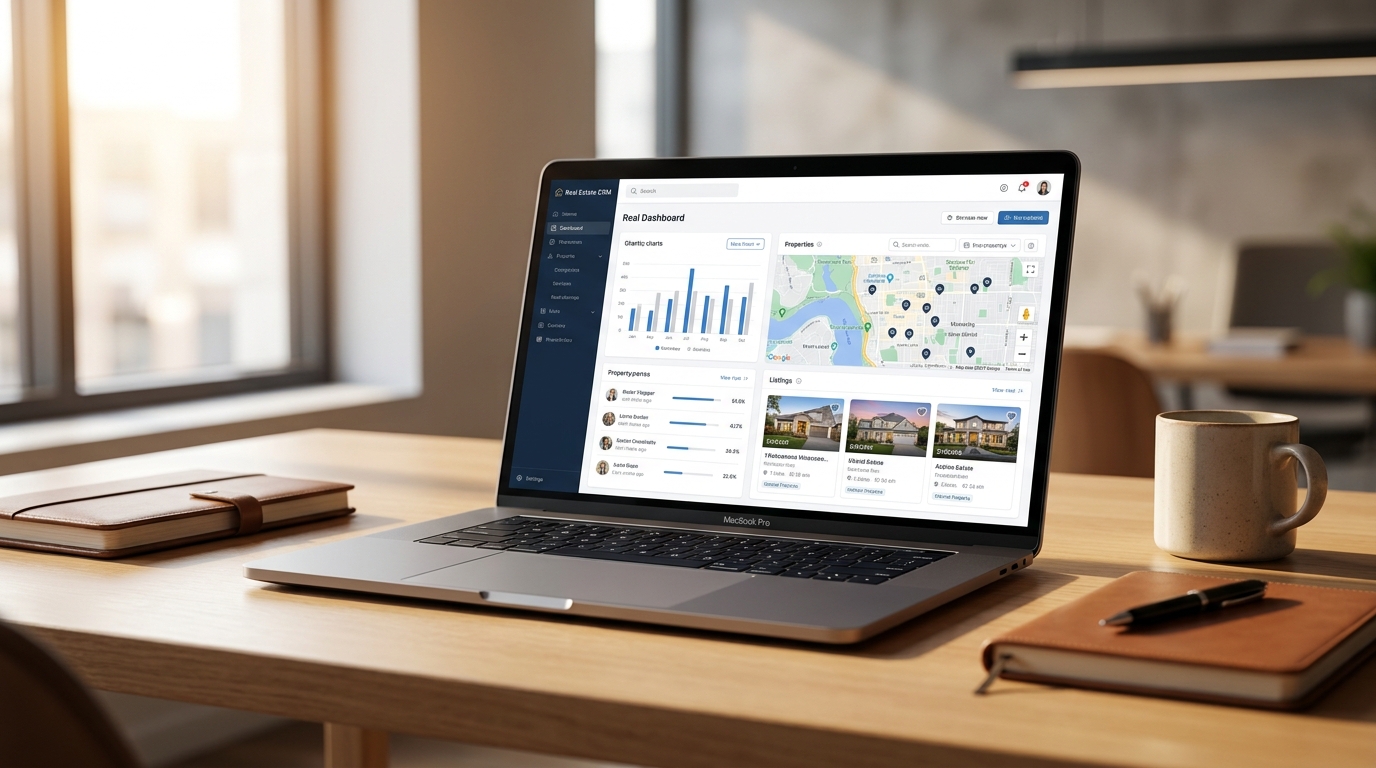
That fixes intake, but not follow-up: knowing a lead exists and is properly recorded doesn't guarantee anyone calls it back in time. For that, the next step needs to be written down somewhere that doesn't depend on one agent's memory.
Follow-up can't live inside one agent's head
Every contact in the CRM keeps its full history and its interests linked to listings, so whoever picks a lead back up two weeks later isn't starting from scratch asking what they were after. The calendar of actions and viewings links straight to each contact, so "call on Tuesday" isn't a mental note left with whoever took the message — it's an entry that shows up on the team's calendar even if that person is off sick or on holiday that week.
The Messages inbox, with its unread filter and status, shows what's come in and still hasn't been touched, instead of leaving that visibility scattered across each social app. And because the Reports module counts every week how many new leads the agency received and how many of them someone on the team has already followed up, a branch manager spots a follow-up bottleneck on Monday, not a month later while trying to work out why viewings have dropped.
A case: peak season with three channels open at once
An agency on the Costa Blanca that attracts overseas buyers through Facebook and Instagram, on top of the portals, hit June with over forty new leads a week spread across the three sources, handled by two people taking turns with the office phone. Under that load, telling which messages had already been answered from which had been waiting three days came down to whoever had picked up the phone that morning remembering correctly, and more than one buyer who'd written in through two different channels ended up getting the same reply twice, from two different people on the team.
Once Instagram, Facebook and the portal inboxes were connected to the CRM, the forty weekly leads started arriving as contacts already deduplicated, with their source channel visible and their viewings booked on the same calendar the rest of the office uses. The Messages unread filter became the first screen checked every morning, and the duplicate replies stopped happening, because there were no longer two separate records for the same person.
This kind of follow-up sits alongside the rest of the capture and matching features, which decide, once a lead is a contact, which listing in the portfolio actually fits what they're after. If your agency already centralises leads but wants to know which numbers to check each week to catch a bottleneck like this one early, the article on the KPIs worth checking every week is a good next read.