Local SEO for estate agencies: what your CRM has to do with showing up on Google
RealEstateCRM España · 7 September 2026
An agency in Valencia has been selling flats in the same neighbourhood for ten years, and yet searching "estate agency" plus that neighbourhood's name on Google puts it third on the list, behind two agencies that opened barely two years ago. Its Google Business Profile listing shows the address of a branch they left in 2023. The website has the right address. And on Idealista, the contact number still belongs to an agent who left the company a year ago. None of that is deliberately wrong — nobody has simply gone back to check it all together since the office move.
An estate agency's local SEO depends, above all, on the name, address and phone number of each office matching exactly across your website, your Google Business Profile listing, the portals and any directory you appear in, plus having content of your own — not just listings hosted on Idealista or Fotocasa — that Google can tie to your business. A CRM doesn't replace the Google Business Profile listing, which still has to be managed separately, but it can be the one place where that data exists just once and always comes out the same.
A Google listing doesn't live on its own
Google decides which business to show first on the map by cross-checking what your Google Business Profile listing says against what it finds about that same agency elsewhere online: your own website, the portals, some directory in the sector. If the listing's address doesn't match the website's, or the phone number changes depending on where you look, Google has no way of telling which version is correct, and a younger agency with more consistent details ends up ranking ahead of you.
It isn't a penalty for having the details wrong, or an algorithm explicitly punishing the mistake. It's simpler than that: the trust needed to rank near the top is built through consistency across sites, and that consistency erodes on its own with every office move, every agent who leaves, and every website update nobody carries over to the other places the agency also exists online.
One office, one place where it actually exists
RealEstateCRM's multi-office administration module registers each branch once, with its own name and the team assigned to it, instead of everyone typing the address from memory each time it's needed somewhere new. When an agency with three branches needs to update the Google listing for the office that moved, register with a new local directory, or check the website's footer, it copies the same detail from the same place, instead of rebuilding it from memory branch by branch.
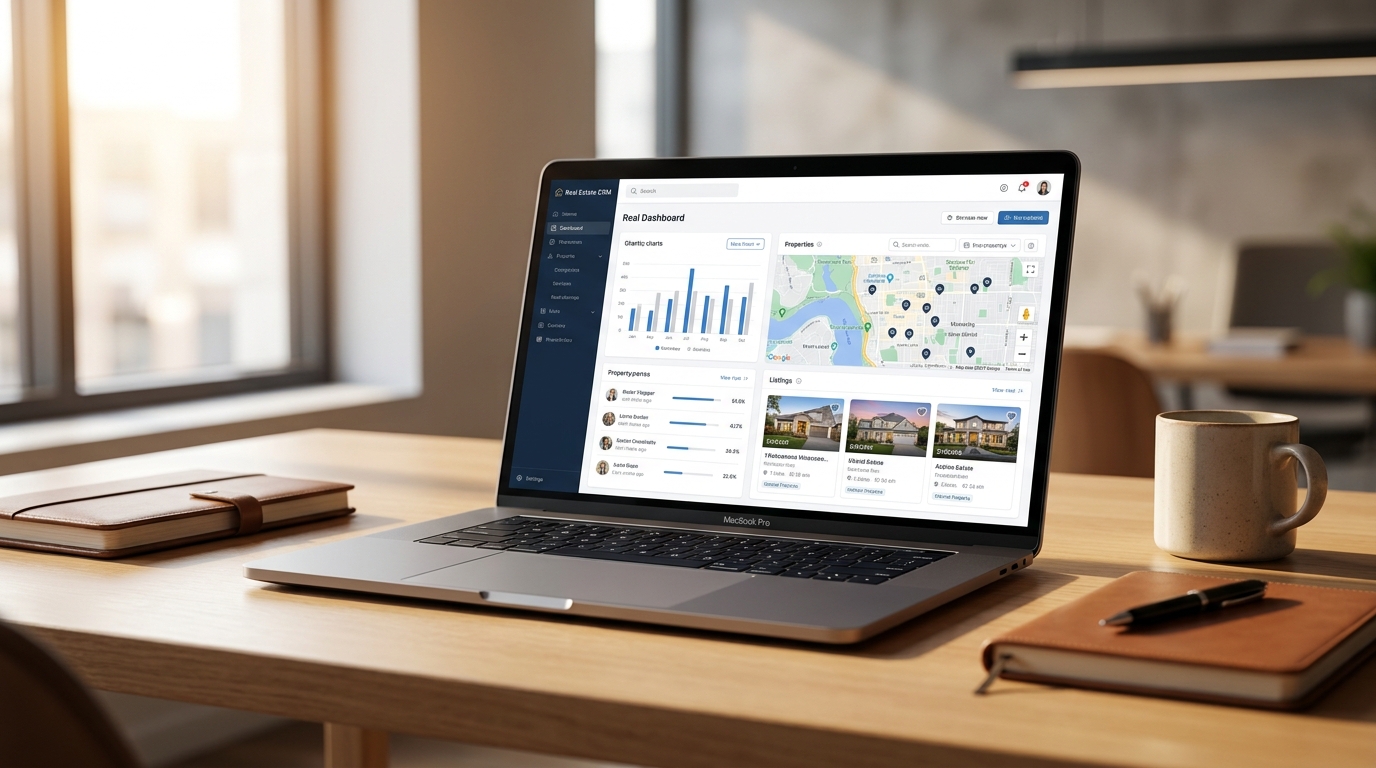
The CRM doesn't publish that Google listing for you — that part is still manual, just like reviews are — but it does remove the most common reason details end up out of sync: everyone typing them their own way, on whichever site they happen to be updating that day.
Without a website of your own, your content is rented
Listing a flat on Idealista or Fotocasa puts it in front of buyers, but that page belongs to the portal, not to your agency: it's Idealista that builds up the authority of that content on Google, not your business. You can customise the SEO title and description for each listing separately on every portal you publish to, which stops a listing competing against itself with identical text repeated across five sites — but that improves your standing within each portal, it doesn't build the authority of a domain that's actually yours.
That takes a website of your own, with content indexed under your name: it's why we design each agency's website as a bespoke project, connected to its CRM, instead of leaving the portfolio's only online presence living inside someone else's portal. Generating or improving the title, description, SEO and keywords for each property with your own AI provider helps in the same direction: besides saving the time of writing every listing from scratch, it avoids the quietest content mistake of all — repeating the same generic description across dozens of listings so Google never knows which one is actually relevant to a given search.
A case: three addresses for the same office
An agency with offices in Gijón and Oviedo ran into the problem while preparing a local acquisition campaign: searching its own name on Google, the Gijón office's Google Business Profile listing showed the wrong building number, the website had the right number but a postcode left over from a 2022 move, and the footer on the PDF listings handed to owners carried a third version, copied from an old template.
No owner had ever complained, because nobody compares those three sources at once — but Google does, constantly. After registering both offices in the CRM with the correct details and updating the Google listing, the website and the PDF templates from there with the exact same text, the agency stopped having three competing versions of its own address showing up in every search.
None of this replaces managing the Google Business Profile listing properly or earning genuine customer reviews — that stays manual work, outside the CRM. But the part that does depend on your agency, keeping each office's details in one place and having a website of your own instead of living solely inside a portal, is where the bespoke website connected to your CRM comes in. If your agency already publishes on several portals and wants to know what part of that listing SEO can be automated and what still has to be done by hand, the article on publishing to several portals at once is a good next read.